Monday, September 30, 2013

Schlepping Sully Part II

Have you ever heard the reason I moved to northern California? If you haven't, you're the only one. So I would never be hot again as long as I live.

A couple of years ago, when it was clear that I could no longer afford the gas to keep the battery charged much less take another road trip, I sold the RV. About the same time the Cash for Clunker opportunity came along and I got rid of my Ford Explorer. I now drive a Prius. Additionally, I'm not pleased about the fact I am three and a half inches shorter than my once full height of 5' 5", but it came in handy when I decided I would camp on my trip to Montana. Not in a tent. I'm way too old to be interested in that. In the Prius. I pulled the passenger seat all the way forward, placed a feather comforter the full length of that side of the car, added a sleeping bag, a couple of pillows, my little cook-stove (for coffee in the mornings) and a small cooler. I spent the first two nights at my friend's gorgeous 'beach' house in Yachats, then headed east. I watched the temperature going up and up as I got away from the Oregon coast. By the time I got to Bend, it was in the high 90s. I checked into a motel for the night.

I went to Bend specifically to visit Healing Reins, a therapeutic riding center. A friend of mine is working toward launching a center here on the Mendocino coast. I wanted to make contact with one of the best.
                              http://www.healingreins.org/ 
 
When
Wednesday October 16, 2013 from 9:00 AM to 4:00 PM PDT
at Healing Reins in Bend


There were two new chickens in the carrier. I'm not sure of the message this little goat was sending them.
This picture is blurry because I was smiling too hard.
  http://www.nps.gov/joda/index.htm
                John Day website

From Bend I drifted northeast, hoping for cooler weather. I'd wanted to visit the John Day Fossil Beds again, but it was 95 degrees there, so I snapped a couple of pictures and drove on to find a motel with a strong AC unit in Ontario, OR. That night there was a lightning and thunder storm that made this old fossil happy to be snug in her bed.

It was in Idaho I first noticed that 'deer crossing' signs had changed to 'game crossing.'

The next day the temperature was nearer what I thought I could cope with, and I was determined to camp on my last night before reaching Holland Lake Lodge where the writing workshop was to take place. I crossed Idaho and came into Montana through Lolo. That's where the big fire was earlier in the month. The aftermath, as expected, was sad, but it gave me renewed admiration for fire-fighters. I passed a number of houses that remained untouched by the fire which had burned all the trees around them. One right up to its back door.

Because of the fire, all the campgrounds were closed for the remainder of the season. I checked into a motel in Missoula. Missoula, BTW, is beautiful. They have an appreciation for trees that beats anything I think I've ever seen. From an over-pass, the tops of trees are all you can see in neighborhood after neighborhood. Very impressed.


First afternoon on Holland Lake
See that bird on the shore? Guess who.

Friday, September 27, 2013

Schlepping Sully Part I

Hopi pronounced Hoppy
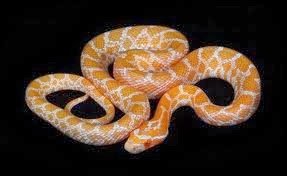
For the last two weeks I've either been driving to Montana, writing in Montana, or driving home. I logged 2927 miles. I decided to drive because I reread Steinbeck's Travels With Charlie this summer, and used to love to drive. When I moved to Fort Bragg from Miami I took a circuitous 9000 mile route, rambling through the five states that I had never been to: Arkansas, Wisconsin, North and South Dakota, and Montana. It took me seven weeks of traveling back-roads in the RV I bought expressly for the move. I was accompanied by my parrot, then only 11 years old, a tame white dove who sat on infertile eggs the entire trip in her basket which hung in the bathroom off the shower head, and an albino
Rosie
red rat snake--one of my going away presents. Rosie lived 9 years. In Nauvoo, IL, I picked up a stray kitten. That trip was 22 years ago.


My trip to Montana started with a 10 hour drive up the coast to Yachats (pronounced Ya hots), OR. A dear friend moved there a few years ago and this was a chance for a visit. She took me to Newport where we visited the Hatfield Marine Science Center. They had truly interesting exhibits, but you know my fondness for octopuses. They have a Pacific Giant octopus on 'octocam' which they feed on Mondays, Thursdays and Saturdays at 1 pm. If you go to the octocam at that time, you can watch them feed her. http://hmsc.oregonstate.edu/visitor/octocam (if link doesn't work, copy and paste into your search engine.) 

Waves at Point Cabrillo for example
Another stop we made was to a memorial for two young men who were killed when a sneaker wave swept them off the rocks. I was so moved by the memorial one of the boy's mother had erected at the site, that I took pictures. Here on the Mendocino Coast, not a year passes that we don't have a fatal encounter with the sea. 


They were standing on the rock at the top of the picture 

And were swept into the crevice.


The memorial on a prettier day by Linda Watson


So who is Sully?
Wait for Part II in a few days.


Friday, September 6, 2013

Sluggo


This is Sluggo, a baby skunk I rescued. The full story is on my website, which I've just spent the day editing, and up-dating. I've posted some pictures--animals and family history--and a few short stories.

I'm taking a couple weeks off to work on a new project, so I thought maybe you'd be willing to take a look at all the work I've done on the website.
                           www.ginnyrorby.com
(If this link doesn't work, click through via the link at the upper right hand corner.)


     I'll be back in touch toward the end of the month.


Friday, August 30, 2013

Back to Africa by Tanya Smart

Back to Africa
Once again, we spent too many hours in an airplane in order to spend too few hours watching elephants and the other wonders of the African continent. We journeyed in Southern Africa – 10 days in Botswana and four in Zimbabwe. Our Letaka Safari guide was Nkosi Sibanda who had showed us the wonders of the Okavango Delta two years ago. Enjoying our first African sunset at the Okavango River Lodge was made perfect by our first African Gin and Tonic.
Moremi Game Reserve in the Okavango Delta is the favorite part of our safari. Flying in over the delta looking for elephants and giraffe is spectacular, as is landing in the very small airplane on the small runway in the middle of the bush. The wildlife is used to vehicles so one gets up close views without feeling that you are disturbing or altering behavior. Among the first spectacular sightings during the three days was a daytime view of the endangered Wild African Cat. They look much like the average housecat and unfortunately will interbreed with domestic cats, as well as catch their diseases. The next day we watched and listened to two wild dogs that were vocalizing in an attempt to reconnect with their group. Their vocalizations were unexpected – not wolf-like howls or any sort of dog-like sound that I’d heard before but more like a high pitched keen. One dog would sound out, then both would listen intently – completely ignoring us. At a later time, Nkosi placed us perfectly to watch a successful wild dog hunt – chasing impala who attempted but failed to flee through water. We were sad for the impala that was caught and more so for another confused animal standing in the river watching the dogs and not seeing the crocodile who took advantage of the impala’s distraction. National Geographic photographers spend months in the field to film what we’d just seen in 30 minutes or less.
We watched a group of lions strategically place their sub adult males in clear view of waterbucks while the females attempted to circle around out of view. It didn’t work, thanks to some vocal francolins. It was then that we discovered that the battery on the truck was dead. Not to worry, it is easy to attract help if you tell the other guides that they and their guests will see lions.


Some of the lions we saw were little cubs the last time we were there. Mortality in lion cubs is high so there were fewer in the pride than two years ago but they looked healthy and well fed. Nkosi gave us good long times watching this pride as well as several groups of elephants. I could watch elephants for hours and never be bored.
While we were out looking for wildlife, lions and leopards visited our camp. In fact, each time that the camp staff went out for firewood, they had a spectacular sighting. We thought maybe we should go collect firewood with them. At night, with lions so close, the impala stayed closer – bedding down within sight of our campfire.
The next three days in Khwai we could venture out at night to see what might be there. Bouncing eyes meant springhares, more than we could count. Small feline predators such as Genets and Civets are out at night and their glowing eyes helped the diurnal humans find them. We possibly saw bush baby eyes. We sat (in our truck) outside an abandoned aardvark burrow at dusk, waiting until the hyenas and their cubs came out after dark. I am fascinated by hyenas so this was a true treat. As cubs nursed on what we assumed was the alpha female, another hyena paying very close attention until it was snapped at by the nursing mom. The chastised individual laid down in another spot and several cubs joined her to nurse. An adult of unknown gender (it is hard to tell with hyenas) brought out a piece of well chewed something to play “tug” with a pile of cubs. 
Nkosi found the wild dog den with a pile of puppies outside and helped us spot a female leopard and her older female cub. This momma leopard had a younger cub and it was unusual for her to tolerate her older daughter nearby. It was clear she was barely tolerating the adolescent as she vocalized warnings frequently. Sydelle’s goal of being the first to spot at least one animal was rewarded when she was the one to find the younger cub.
We had an unfortunately placed campsite in Savuti that meant long drives each morning to the spectacular Marsh. Nkosi and the camp staff made the best of it by packing our lunches each day so we could spend the maximum time out. We observed a group of elephants pass by some well-fed lions who had happened to take their siesta in the middle of an elephant trail. The elephants were almost stepping on the sleeping cats. Elephants can’t see that well, but they could clearly smell the lions. The lions weren’t rousing no matter what. A large number of elephant bones lying near roadways was the evidence of an extended heat wave that Savuti experienced in October/November of 2012. The elephants died returning from drinking, making us wonder if they had died from electrolyte imbalance caused by overdrinking after dehydration. 

We saw so many antelope that I can’t list them all but the second ever sighting of a bushbuck was a highlight as were abundant sightings of the magnificent Sable and Roan antelope. Though there are never enough giraffe or zebra for me, we did see quite a few. The giraffe in particular were less skittish than past visits. It was dryer than two years ago so perhaps they were more focused on eating.
Letaka specializes in birding safaris and though ours wasn’t a birding group, we saw lots and lots of fantastic birds. Lilac breasted rollers always got an Oooh and an Aahh. No wonder for a bird whose feathers represent the rainbow and looks like liquid turquoise in flight.
Our unfortunate campsite meant that we had limited time in Chobe and were unable to enter at the Ngoma gate on our last day. Chobe may be crowded with day trippers but it is also filled with spectacular wildlife in abundance. Our disappointment was quashed by the boat excursion where we were treated to several groups of swimming elephants. There is nothing more adorable than a swimming baby elephant.
This part of the trip ended in Kasane. One of these times we need to do the reverse itinerary so that I stop disliking Kasane – it is not the town’s fault but its association with the end of the safari that makes me dislike it. From here we transferred to Victoria Falls, Zimbabwe. Cross boarder transfers are interesting – enough said.
Our lodge in Vic Falls was beautiful without being snooty. One does notice the grime that one accumulated in the bush immediately upon entering a non-bushish establishment. We were suitable for the dining room after a long shower and change of clothes. The sound of the falls soothed us to sleep. We got up early to view this World Heritage Site before our 9am pick up for Hwange Camp.
Hwange Camp in Zimbabwe is a year old establishment that is structured to be comfortable, but not ostentatious. It was strategically placed and built to provide maximum views of the nearby large waterhole. A baby hippo had been born days earlier and was wonderful to watch. At night, one could hear the hippos and sometimes elephants munching vegetation outside the cabins. We met new friends from the UK on the way to Hwange who were our companions on safari for three days, and made more friends each evening over a scrumptious meal. 
Wildlife in Hwange National Park is not as used to vehicles or humans as that in Botswana though the wild areas are contiguous and presumably wildlife from one area can easily migrate to the other. The elephants were testier, the antelope shyer and walking safaris were possible. Coming upon a lion on its kill meant no tragedy for humans, just a scared lion (Brent was a little scared too – I didn’t see the lion). We saw lots of tracks but few animals while walking though we did see a recently killed civet in a tree – probably stashed there by the leopard whose tracks we were following. During our afternoon siesta by the truck, a group of elephants came close by which was quite wonderful. The other group had seen a lion kill a baby elephant on their way in. One guide said that elephants in Hwange often leave their calves behind when they go to drink. This was most certainly not the case in Botswana – the mother and entire herd protected and defended calves vigorously. This behavior has been described in studies where elephant herd social structure had broken down due to poaching of the older adults. We don’t know if that was what happened in Hwange but seeing different behaviors was interesting.
Our reason for visiting Zimbabwe and Hwange Camp was to see black rhino. Unfortunately, poaching in Hwange has reduced the population from around 45 animals to 4-6. The remaining animals were across the river in another part of the park and so this part of the quest was thwarted. Rhino horn is not medicine. 
Our first guide in Botswana said that you have to leave one animal to bring you back next time. This trip it was the cheetah – which we did not see. We’ll be back – though everyone knows that I come back for the elephants.


     All the pictures were taken by Tanya and / or Brent, her husband.

Friday, August 23, 2013

Blue Marble Gratitude by Katy Pye


kamidempsey.com


Elizabeth’s Landing and Blue Marble Gratitude


We writers sometimes characterize our lives as lonely. Huddled over paper or in front of computer screens, we spend uncounted hours in isolation. I suppose this portrait is more than half true. At the beginning and end of the day, it’s my rear in the chair, my vision, my brain, making decisions on where the plot goes, the look of the landscape, and how my characters feel and act.  I wield the power of the gods. At times curl up in despair of the forgotten.

People often ask why I chose sea turtles as the main animal characters for my novel, Elizabeth’s Landing. Survival. I’m moved by their 100 million year track record, despite what nature and people continue to throw at them. Turtles are cultural icons around the world, symbols of longevity, wisdom, and patience. They manage their own form of almost solitary living. Many times I felt like a world-wandering loggerhead or feisty Kemp’s ridley stubbornly, perhaps instinctively, pushing against or riding my story-telling currents.

But like the turtles these days, I wasn’t paddling alone. A small world of sea turtle conservationists, scientists, researchers, eco-warriors of all stripes, and, of course, family, friends, and fellow writers, each on his and her own path, gave time to support me and mine. All our effort culminated in a book launch at Gallery Bookshop. I had a blast. Joyful e-mails came from near and far. Standing room only. Lots of books sold. I read, answered questions, and shamelessly reveled in the moment. A tiny hatchling in a humongous author ocean.

In such moments, one swims in an equally large ocean of gratitude. You can’t escape it. My character Elizabeth doesn’t act alone, and I didn’t either. So, how to give back? How to carry the moment beyond myself? One of my favorite authors, Catherine Ryan Hyde, wrote Pay It Forward, which started a worldwide movement. In the sea turtle world, the pay-it-forward guy is sea turtle biologist, educator, and conservationist extraordinaire, Wallace “J.” Nichols. His “Blue Marbles Project,” aims to pass blue marbles through the hands of every person on earth. Each marble is a symbol, a “celebration of our beautiful, fragile, blue planet.” The “rules” of the blue marble game are simple. The marble must be blue (duh), it is given with an individual message of gratitude, and the story must be shared. My blue marble came encased in a lovely, handmade bar of soap from SlowCoast. I passed it into the hand of an audience member at my launch, in gratitude for the support I’ve gotten writing and publishing Elizabeth’s Landing, and hope for our planet’s future. This post is my share.

I keep a turtle vase, the one Elizabeth gets from her mom in the book, on my desk, reminding me to keep paddling forward. Go the distance, be open to learn and to change (a.k.a. revise), to act and be grateful for whatever the outcome.
photo by Katy Pye

A challenge: Join the Blue Marble Project and go beyond the gesture. Find your own way to make change in the world. It doesn’t have to be big, it just has to be yours. Then share it.

This post is in memory of 26 year-old sea turtle conservationist, Jairo Mora Sandoval. May 31, 2013 while protecting critically endangered leatherback turtles, nesting on a Costa Rican beach, he was brutally murdered by alleged egg poachers with likely links to the drug trade. World-wide, reward money was raised, over 10,000 signatures petitioned police to step up the search for the killers. August 1, Todd Steiner, director of Sea Turtle Restoration Project (and others) delivered 137,000 signatures to Costa Rica's Consul General in Los Angeles, demanding justice for Jairo. Six suspects are now in custody. Individual voices, bonded together, continue to make a difference.


Friday, August 16, 2013

From the Center for Great Apes newsletter


Please Vote for Ripley!

RipleyThe Humane Society of the United States (HSUS) is sponsoring
a chimpanzee art contest, with entries from six of the North American Primate Sanctuary Alliance sanctuaries across the U.S.  We have a great chance to win, so cast your vote today and every day until August 22nd .  First place winner will receive a $10,000 grant from HSUS! Please urge your family and friends to participate too – it's easy and only takes a few seconds to vote.  Just visit www.humanesociety.org/chimpart and cast your vote for our wonderful chimpanzee artist, Ripley! Don’t forget - you can vote EVERYDAY until August 22nd at 5 p.m.!
Blossoming New Friendship

Chuckie & Mari walkingFun-loving orangutan Chuckie, has made a new friend...and it's Mari!   The two redheads recently had a play-date, and boy, did they have a great time!  Our concern was how Chuckie would react to Mari who has no arms.  Even though Mari is about one-third the size of nearly 300-pound Chuckie, he was the one who was a little apprehensive when he first entered the habitat.  But after only a few minutes, they were sitting across from  each other and playing a very slow version of “tag.” Chuckie reached out 
Chuckie & Mari relaxing
and tickled Mari’s foot then sat back.  Mari waited a few minutes then stuck her foot out to touch Chuckie.  They did this for a little while, and then Chuckie decided to wander around the habitat.  Mari stood up and followed him everywhere he went.  Both orangutans eventually laid down- head to head- and played tug-of-war with a piece of pine straw!  Needless to say, it was a very gentle version of tug-of-war, but they seemed to really enjoy each other’s company. Pongo is still Mari's "main man", but one of the greatest gifts we can give our orangutan and chimpanzee residents are new and enriching friendships. 

WHY MARI HAS NO ARMS
Mari, a Sumatran orangutan, came to the Center from a research facility in Georgia where she was part of a language and cognition study. Mari is a very unusual orangutan in that she has no arms. She lost both her arms while still an infant when her mother, in a very agitated state, damaged her limbs beyond repair. In spite of the accident, Mari is a very capable orangutan. She uses her chin to hoist herself up, uses her feet as we would our hands, and she walks upright (or rolls when she wants to get somewhere quickly). Initially, we were concerned that she might have difficulty maneuvering in a new environment, but she quickly proved us wrong. She moves with such ease and grace that sometimes we forget that she is missing her arms.

When Mari first arrived at the sanctuary in 2001, she spent several months in quarantine (which is standard for new arrivals). Our first two resident male orangutans (Pongo and Christopher) could see Mari everyday from their nighthouse and were fascinated with her! They spent many hours watching Mari and often tried to get a reaction from her. The first week she arrived, young Christopher “dressed himself up” with celery stalks around his neck and on his head, and then paraded around in Mari’s view. He kept checking to see if she was looking at him. We’re not sure whether Mari was impressed, but he definitely had her attention!

Pongo and Christopher are the first male orangutans Mari had ever seen. She was gradually introduced to both boys and has lived peacefully with them in their large domed habitat, but if the boys get rowdy, Mari handles them either with a “kung-fu” kick, or a spit-in-the-face! When Pongo was an adolescent, but still much larger than Mari, he would retreat into a bucket or tub to get away from the intimidating stare Mari gave him if she wasn’t in the mood for play.

Many mornings, Mari climbs the ladder to the top of the 40-foot tall enclosure using her chin and her feet. And she likes to spend part of the day walking upright through the woods in the chute system. Usually, she follows Pongo everywhere he goes, but occasionally she likes to go out in the woods for time alone.

from the Center for Great Apes website. http://www.centerforgreatapes.org 

Sunday, August 11, 2013

A Kid Who Wows Me

In June, I sent Jessica's story about her life with OCD. It had been chosen for NPR's Radio Diaries. Here it is again, but there is now more to the story. Jessica is reaching out to other kids with OCD. Please take a look at this link.
http://www.indiegogo.com/projects/camp-audeamus-a-camp-for-kids-with-ocd

I get lots of wonderful emails from kids. We usually write back and forth for a few weeks, then they get bored and move on. However, a few keep in touch, and Jessica is one of them. We've been writing for a number of years now. Jessica maintains a blog where she writes truly insightful comments on books she's read. I think this one is the link to Steve Job's bio.
and another for everything else  http://adhocfornow.wordpress.com

You can imagine how proud of her I am already, and then I find out she's been chosen to be included in NPR's Radio Diaries, which are personal stories written by kids.
Jessica's is the second one from the top. Click on the picture of HOPE. It's entitled Firsts and Fives.